
カメラのレンズにはどのサイズのフィルターが必要ですか? (簡単なステップバイステップガイド)
Freewell Gear
カメラレンズにはどのサイズのフィルターが必要ですか?(簡単なステップバイステップガイド)
フィルターのサイズ選びを誤ることは、写真家やビデオグラファーにとって最もよくある悩みのひとつです。しかし、適切なサイズを見つけるのは、どこを探せば良いかさえ分かれば非常に簡単です。
このガイドでは、レンズフィルターのサイズを素早く確実に見つける方法を正確に学び、最初から適切なフィルターを購入できるようになります。
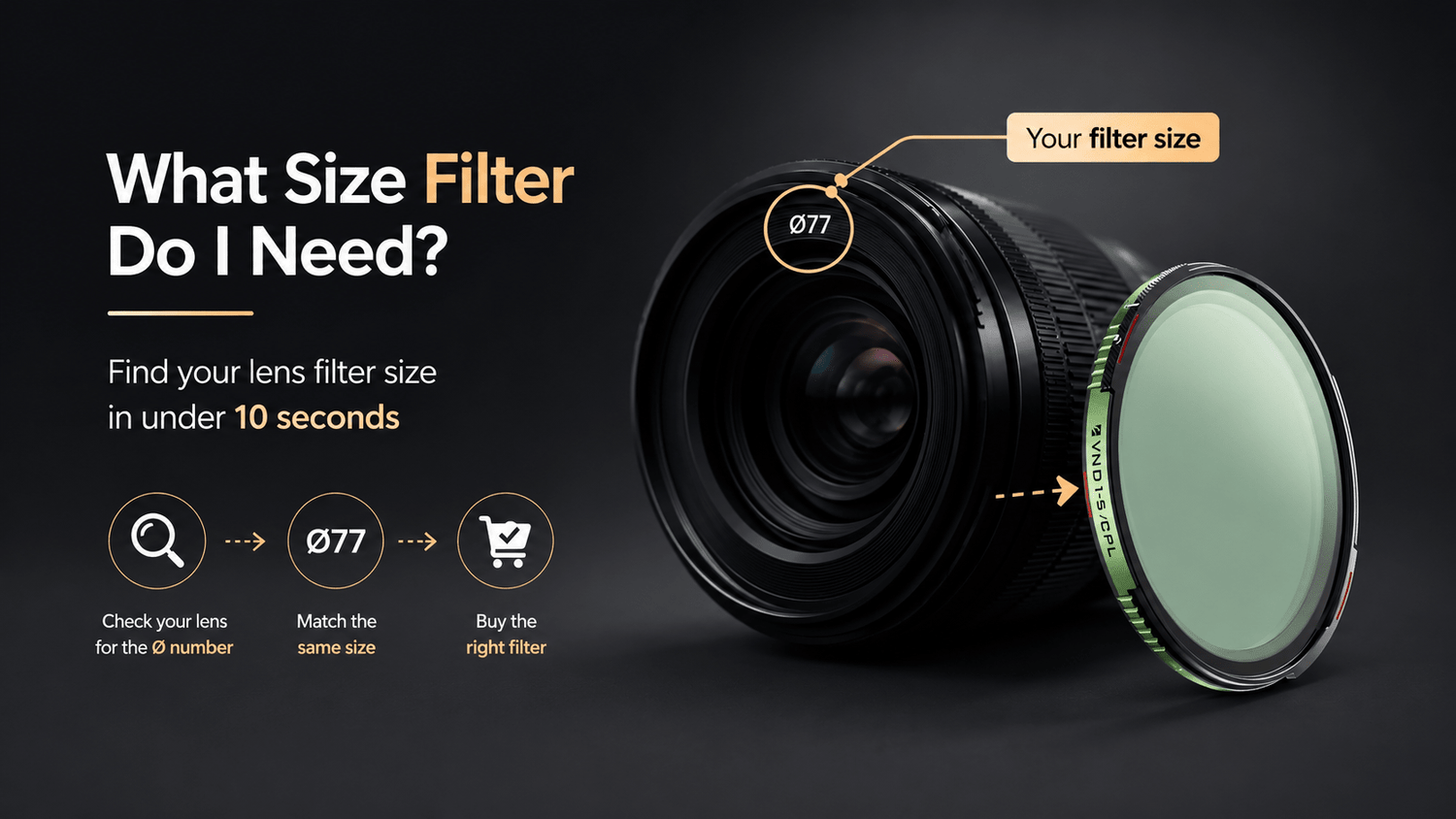
ステップ 1: レンズの前面を確認する (最も簡単な方法) & 最速の方法)
レンズを裏返して、ガラスレンズ付近の前面鏡筒を見てください。以下のような刻印が見えるはずです。

⌀58mm 直径67mm 77mm
- の ⌀ または Ø 記号は直径を表します。
- その後に続く数字(58、67、72、77、82など)はあなたの フィルターのねじサイズ ミリメートル単位。
これが注文する必要のある正確な数量です。 単に 買う 同じサイズのフィルターを使えば、ぴったりとねじ込むことができます。
ステップ2:まだ確信が持てない場合は、これらの方法を試してください。

- チェック オリジナルのレンズキャップ サイズは側面または内側に印刷されていることが多い。
- 中を見てください レンズユーザーマニュアル または仕様。
- お使いのレンズの型番と「フィルターサイズ」をGoogleで検索してください(例:「ソニー 24-70mm フィルターサイズ」)。
- 最終手段として、定規またはデジタルノギスを使ってフィルターのネジ山の内側を慎重に測定してください。
重要なヒント: 同じカメラでも、レンズによって必要なフィルターサイズが異なる場合がほとんどです。必ず各レンズを個別に確認してください。
カメラレンズフィルターの最も一般的なサイズ

フィルター購入のためのプロのアドバイス
- フィルターのサイズは必ず正確に合わせてください。 最高の光学性能を実現するためには、適切なネジ径のフィルターを使用することで、フィルターをレンズエレメントにできるだけ近づけることができます。これにより、周辺光量落ち(暗い隅)、光漏れ、不要なフレアを防ぎ、よりシャープでクリアな画像が得られます。
- ステップアップリングはお金を節約します: 高品質のFreewellフィルターを 最大 レンズサイズに合わせて、小さいレンズにはステップアップリングを使用してください。こうすることで、複数のサイズのフィルターを購入する必要がなく、高品質フィルターを1セットだけ購入すれば済みます。
推奨されるアプローチ: 予算に余裕があれば、最も重要なレンズには必ずぴったりのサイズを選びましょう。それ以外のレンズについては、ステップアップリングが賢明で費用対効果の高い解決策です。

適切なフィルターを購入する準備はできましたか?
フィルターのサイズがわかったので、安心して買い物ができますね。
で フリーウェルギア, 私たちはプロフェッショナルなデザインをします NDフィルター, 可変ND, 偏光フィルターとマグネット式フィルターシステムを、あらゆる人気サイズで取り揃えています。当社のフィルターは頑丈で色再現性に優れ、実際の映画制作や写真撮影のために設計されています。
次のステップ: カメラを取り出し、レンズの口径(⌀)を今すぐ確認して、そのサイズにぴったりのフィルターを探しましょう。
特定のレンズモデルをお持ちですか?お気軽にお問い合わせください。 カスタマーサポート そして、お客様に必要なフィルターの正確なサイズをお伝えします。
楽しい撮影を!そして、もう二度とフィルターサイズを推測する必要はありません!
よくある質問
Q:小型レンズに大型フィルターを使用することはできますか? はい、ステップアップリング/ベースリングを使用すれば可能です。実際、これは推奨されています。
Q:より大きなレンズに、より小さなフィルターを使用することはできますか? いいえ。周辺減光(画面の四隅が暗くなる現象)が発生します。
Q:フィルターの厚さは重要ですか? はい、特に広角レンズ(24mm以上)の場合に顕著です。厚みのあるフィルターは周辺光量落ちを引き起こす可能性があります。
Q:どのサイズのフリーウェルフィルターを購入すればよいか、どうすればわかりますか? レンズに記載されている直径の数字を合わせてください。当店では一般的なサイズをすべて取り揃えております。